Nuts
Nuts have internal threads to match the threads on a bolt or other externally threaded fastener. They are used to join materials together with a secure, adjustable connection.
The most common type of nuts are hex nuts, which typically come in 2 patterns: Finished or Heavy. Beyond a few select industries, finished hex nuts are the most common, while heavy hex nuts are more commonly used in piping and structural applications.
Learn about specific nuts or browse our full selection below.
Finished Hex Nuts
Finished Hex Nuts are the most common nuts on the market and are considered a “standard” nut that’s utilized in various industries and applications. Marshall Sales offers these nuts in Grades 2, 5, 8, and stainless steel. We also offer these nuts in metric classes 8, 10, and stainless steel.
Dimensions for Standard Finished Hex Nuts follow 18.2.2 and Metric follow DIN 938/ISO 4032.
Basic Dimensions for Inch Finished ASME 18.2.2
| Size | Width Across Flats | Thickness |
|---|---|---|
| 1/4 | 7/16 | 7/32 |
| 5/16 | 1/2 | 17/64 |
| 3/8 | 9/16 | 21/64 |
| 7/16 | 11/16 | 3/8 |
| 1/2 | 3/4 | 7/16 |
| 9/16 | 7/8 | 31/64 |
| 5/8 | 15/16 | 35/64 |
| 3/4 | 1-1/8 | 41/64 |
| 7/8 | 1-5/16 | 3/4 |
| 1 | 1-1/2 | 55/64 |
| 1-1/8 | 1-11/16 | 31/32 |
| 1-1/4 | 1-7/8 | 1-1/16 |
| 1-3/8 | 2-1/16 | 1-11/64 |
| 1-1/2 | 2-1/4 | 1-9/32 |
| 1-3/4 | 2-5/8 | 1-1/2 |
| 2 | 3 | 1-23/32 |
Basic Dimensions for Metric Hex Nuts DIN 938/ISO 4032
| Size | Width Across Flats | Thickness |
|---|---|---|
| M2 | 4 | 1.6 |
| M2.5 | 5 | 2 |
| M3 | 5.5 | 2.4 |
| M4 | 7 | 3.2 |
| M5 | 8 | 4 |
| M6 | 10 | 5 |
| M8 | 13 | 6.5 |
| M10 | 17 | 8 |
| M12 | 19 | 10 |
| M14 | 22 | 11 |
| M16 | 24 | 13 |
| M18 | 27 | 15 |
| M20 | 30 | 16 |
| M24 | 36 | 19 |
| M27 | 41 | 22 |
| M30 | 46 | 24 |
Heavy Hex Nuts
A heavy hex nut is thicker and wider than a standard finished hex nut. Heavy hex nuts are frequently used in construction or critical industrial applications. They are typically used in ASTM material specifications.
Basic Dimensions for Inch Heavy Hex Nuts ASME B18.2.2
| Size | Width Across Flats | Thickness |
|---|---|---|
| 1/4 | 1/2 | 15/64 |
| 5/16 | 9/16 | 19/64 |
| 3/8 | 11/16 | 23/64 |
| 7/16 | 3/4 | 27/64 |
| 1/2 | 7/8 | 31/64 |
| 9/16 | 15/16 | 35/64 |
| 5/8 | 1-1/16 | 39/64 |
| 3/4 | 1-1/4 | 47/64 |
| 7/8 | 1-7/16 | 55/64 |
| 1 | 1-5/8 | 63/64 |
| 1-1/8 | 1-13/16 | 1-7/64 |
| 1-1/4 | 2 | 1-7/32 |
| 1-3/8 | 2-3/16 | 1-11/32 |
| 1-1/2 | 2-3/8 | 1-15/32 |
| 1-3/4 | 2-3/4 | 1-23/32 |
| 2 | 3-1/8 | 1-31/32 |
Jam Nuts
Jam nuts are low-profile nuts that are usually half the height of a standard nut. They’re often used to lock a standard nut in place on a bolt by being tightened against the primary nut. This prevents the nut from loosening due to vibrations or other contributing factors. The thinness of a jam nut also allows it to be used in tight spaces where a standard nut might not fit. The jam nut comes in two available patterns, including hex and heavy hex. Dimensions for both follow ASME 18.2.2
Basic Dimensions for Inch Heavy Hex Jam Nuts ASME B18.2.2
| Size | Width Across Flats | Jam Thickness |
|---|---|---|
| 1/4 | 1/2 | 11/64 |
| 5/16 | 9/16 | 13/64 |
| 3/8 | 11/16 | 15/64 |
| 7/16 | 3/4 | 17/64 |
| 1/2 | 7/8 | 19/64 |
| 9/16 | 15/16 | 21/64 |
| 5/8 | 1-1/16 | 23/64 |
| 3/4 | 1-1/4 | 27/64 |
| 7/8 | 1-7/16 | 31/64 |
| 1 | 1-5/8 | 35/64 |
| 1-1/8 | 1-13/16 | 39/64 |
| 1-1/4 | 2 | 23/32 |
| 1-3/8 | 2-3/16 | 25/32 |
| 1-1/2 | 2-3/8 | 27/32 |
| 1-3/4 | 2-3/4 | 31/32 |
| 2 | 3-1/8 | 1-3/32 |
Basic Dimensions for Inch Finished Jam Nuts ASME 18.2.2
| Size | Width Across Flats | Thickness |
|---|---|---|
| 1/4 | 7/16 | 5/32 |
| 5/16 | 1/2 | 3/16 |
| 3/8 | 9/16 | 7/32 |
| 7/16 | 11/16 | 1/4 |
| 1/2 | 3/4 | 5/16 |
| 9/16 | 7/8 | 5/16 |
| 5/8 | 15/16 | 3/8 |
| 3/4 | 1-1/8 | 27/64 |
| 7/8 | 1-5/16 | 31/64 |
| 1 | 1-1/2 | 35/64 |
| 1-1/8 | 1-11/16 | 39/64 |
| 1-1/4 | 1-7/8 | 23/32 |
| 1-3/8 | 2-1/16 | 25/32 |
| 1-1/2 | 2-1/4 | 27/32 |
| 1-3/4 | 2-5/8 | 31/32 |
| 2 | 3 | 1-3/32 |
Hex Machine Screw Nuts
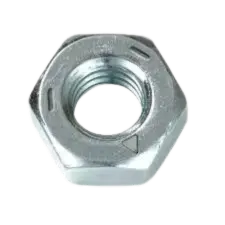
Machine Screw Nuts are typically used in light-duty applications and have a diameter smaller than 1/4″. They come in two finishes, including low-carbon steel and stainless steel. Standards follow ASME 18.2.2.
Basic Dimensions for Inch Machine Screw Nuts ASME B18.2.2
| Size | Width Across Flats | Max Thickness | Min Thickness |
|---|---|---|---|
| 0 | 5/32 | 0.050 | 0.043 |
| 1 | 5/32 | 0.050 | 0.043 |
| 2 | 3/16 | 0.066 | 0.057 |
| 3 | 3/16 | 0.066 | 0.057 |
| 4 | 1/4 | 0.098 | 0.087 |
| 5 | 5/16 | 0.114 | 0.102 |
| 6 | 5/16 | 0.114 | 0.102 |
| 8 | 11/32 | 0.130 | 0.117 |
| 10 | 3/8 | 0.130 | 0.117 |
| 12 | 7/16 | 0.161 | 0.148 |
Cap (Acorn) Nuts
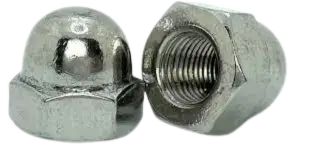
Cap nuts have a domed shape and a closed end on one side. The dome shape provides a decorative look while covering and protecting the exposed threaded end of the bolt or screw. Cap nuts are available in steel, nickel-plated, and stainless steel.
Wing Nuts
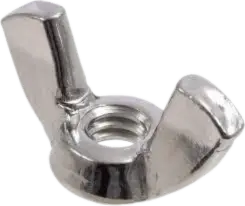
Wing Nuts get their names from the two “wings” on either side of the nut that make them easy to tighten or loosen by hand. They’re designed for quick assembly and are most commonly used in non-critical fixtures. Wing nuts are available in steel, zinc-plated and stainless steel.
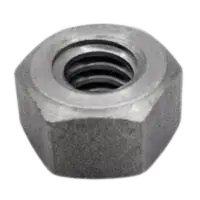
Acme Nuts
An Acme nut is a type of nut designed to mate with an Acme threaded screw, which features a trapezoidal thread form. Acme threads are commonly used for power transmission and converting rotary motion into linear motion, such as in lead screws, jackscrews, and other machinery. The Acme nut’s internal thread profile matches the Acme screw, allowing for precise and controlled movement.
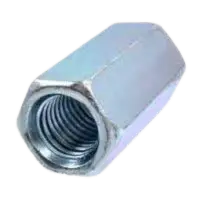
Rod Coupling Nuts
Rod coupling nuts are long nuts that connect two threaded components, usually threaded rods. They are typically hexagonal and are available in steel zinc-plated and stainless steel.
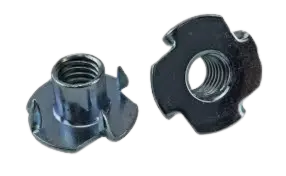
Tee Nuts
Tee nuts are used to create a threaded hole in materials like wood or particle board. They feature a long body with a flange at one end that has prongs that dig into the material when the bolt is tightened, providing a secure hold. This allows for repeated tightening and loosening of bolts without damaging the material.
Not sure which nuts to use for your project? Reach out to our team today.